Thursday, March 20, 2008
Week 9 closed topic - "Missing" Explication
While alienation and isolation are key overall themes in "Missing" I found that the more uplifting and important theme is that of acceptance and assimilation. I would like to discuss how the things said about his daughter bring this to realization. We know from the first paragraph when discussing his blonder than blond hair that this character feels some sort of isolation in his new home because of where he came from and his past. We see his first fixation on how this will effect his daughter when he describes her hair " it has this color that belongs to no one else here, not my wife, not me". Then just a few paragraphs later he says " I could see Hoa's face for a moment there, caught full in the sunlight, and in this light parts of her body that she had because of me seemed very clear, the highness of her brow, the half expressed roundness of the lids of her eyes, the length of her nose, the wideness of her mouth, her hair neither dark, nor light. And I had a twist of sadness for her, as if she had gotten from me imperfect cells". We see here that he fears feelings of isolation for his daughter. We see that he has great guilt for attaching his past to her. His daughter carries all of the Anglican features that muddy her per Vietnamese features, however on sentence in this story turns everything around, it takes us from isolation to acceptance and assimilation. " She lifted the dragon high with both hands and raised it over her, and she slowly brought it down: her hair, her brow disappeared into the dragon, her eyes and her nose and her mouth, my daughter' face disappeared into great bright eyes, flared nostrils, cheeks of blood red and a brow of green". I took the dragon to symbolize the village and the families in it. The dragon swallows all of those Anglican features that he gave her and she plays with the children and they laugh. Just as his daughter brow, hair, mouth and nose became the dragon he has "become" a member of this village, HIS village. The statement he later makes "all brought together by my child" once again reinforces that like his child and her features he and his are a part of the family in this village.

Wednesday, March 19, 2008
Week 9 "Missing" Explication

I wanted to talk about the scene where he is leaning against the star apple tree smoking a cigarette when the picture is taking. He talks about how the sun "crouches over him like a mama-san with her fleet flat going nowhere." Even up in the highlands he quotes that the sun is still there, and that the sun has blonded his hair even more than before. When i hear this I think that he was expecting to be able to fit in with his new family in Vietnam. He was hopeing that his hair would have turned black like his wifes. So it's upsetting to him that all the time he has spent learning and adapting to the culture that the sun still blondes his hair even more exploiting that no matter how hard he tries he will never be exactly like them. He still holds his American past and nothing can change that. I think it is funny how he kind of makes it into a humerous kind of deal about how it looks like he is waving to the camera crying for help when infact it is the total opposite. It kind of makes him nervous about what they say about him being "missing." Because he is not missing he is found. He has found his new life with these wonderful people who were told to be his enemies. The only enemies he knew was his family that he had left behind. These people were kind, family oriented people. The family that he had been longing to be apart of for ever since he was a young boy.
Week 9 Closed Topic- Explication
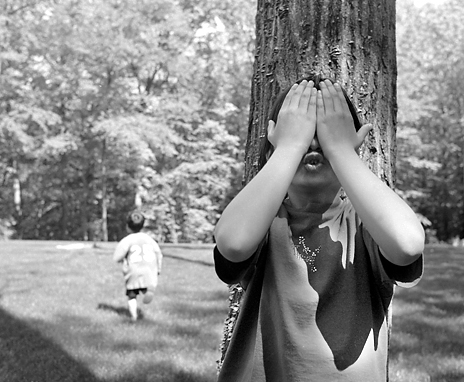
I know the main theme of "Missing" is one of isolation and alienation, but at the same time, I believe that Butler has overcome some of those feelings. He talks a lot about his outward appearance and how that's not one of his "new home", but then he also talks a lot about the village being his village. The main point that made me think this was when he said "I'm not missing. I'm here". Many people in America think he's one of those who are MIA in Vietnam, but in actuality, he has been found, in a culture that accepts him and allows him to be himself. We know by reading this story that he had a troublesome childhood, with the abuse his family endured, but when he came to Vietnam, he"found" himself. He says, "the USA Today has got me on the run, waving pitifully across a field at a photographer to put the word out to the world, but they don't wonder why I'm apparently not smart enough to walk on across that field and say, Take me back to my momma and my papa...who are living ruined lives in America because I'm missing in action". In that statement, I realized that he is not missing as everyone thinks he is; he has finally found himself. He may be isolated from the Vietnam culture physically, but he has become Vietnamese in his heart. Living in Vietnam, he has found a new life and his life in America is his other life. "And I thought of this place in Vietnam where I lay and how it grows coffee and it grows tobacco, and in that other life there was a time in the morning when I could slip out of the house and there was no one around but me and I knew that one day I would escape, and inside they drank coffee and smoked cigarettes and read the newspaper". Butler may be isolated from the community physically, but I believe that he has been accepted and has found the "real" him. He is no longer an American, but a Vietnamese, all except for his appearance.
Week 9- Explicate "Missing"

I decided to focus on the theme of isolation, which I not only found prevalent in Robert Olen’s “Missing” but in the overall theme of the course. A few examples of isolation from previous readings would be, Henry is Lyman Lamartine’s ‘Red Convertible”, Krebs from the story ‘Soldiers Home” and the soldiers from Tim O’Brien’s book “The Things They Carried”. Henry returned from war a new man; he was unable to live his life in a regular society. The war had ruined his heart and soul and had left him isolated from a world away from war. Krebs’s return from war found himself isolated from emotions. He did not care anymore about life or his family, which his mother found emotional straining. The groups of young soldiers from “The Things They Carried” were each isolated from the things they loved the most, for some it was isolation from girlfriends and for others it was religion. Isolation has been a constant focus throughout the semester and none has been more common than that of the American soldier in Robert Olen’s story “Missing”. We learn of the soldier’s isolation and alienation from the life he is living in Vietnam. His blond hair and white skin causes him to have great sensitivity and isolation from the tribe he now lives with. He feels isolated from the dark skin and dark hair that the local’s posses, and states that he has given all the bad American traits to his daughter. The soldier discusses his daughter’s American traits, which he feels has caused isolation to her from the tribe. We see an example of this isolation in a description by the soldier, “My daughter is tall now, her body changing from a girl to a woman, and her hair is the brown of the dried tobacco, not black but the color of what we grow and prepare here”. Isolation is a theme that been constant throughout the semester, and yet again in Robert Olen’s “Missing” we were introduced to the similarities of isolation and alimentation.
Tuesday, March 18, 2008
Week 9- Open Topic

At the age of 18, I spent the summer in the African country of Namibia, hiking through the sand dunes and exploring a world full of poverty and desperation. For a week of my travels, we spent the days hiking Fish river canyon a beautiful and tiring adventure. Aside from the natural beauty we came across, I will always remember the one piece of advice our guide gave to us at the start of our hike. He told my group that there was no need to bring a camera, as the beauty that we could come across would tell its own story and that a still image would not do it justice. At the time, I thought that the guide was completely crazy; as I could not understand why taking pictures would dampen nature’s beauty. Upon arriving back to England, I sat down with my parents to share my pictures. I remember opening up the picture booklet and explaining to my parents the beauty of each picture, only to be frustrated that I could not get across what I had seen. The guide was right, what I had seen could not be replicated by a picture and would never give justice to the beauty of the canyon. This story was brought to the front of my memory today in class while we were discussion the importance of the picture taken by the Italian photographer in the story The Missing. A picture can tell a story, yet without actually being there, a picture can let the imagination run loose on the true meaning of the picture. After hearing the discussion in class today, it led me to wonder how many images of war may be misunderstood and analyzed in the wrong manner due to the lack of intelligence used when understanding the images. When glancing at a picture of war and seeing men with there heads down and marching behind one another, the first thought would be that these men are fed up and ready to come home. The truth of the picture may be however that these men are playing a game of heads down thumbs up and are all thoroughly enjoying there time at war. In many cases, a picture can tell a story, but as Dr. Berger mentioned in class, why do we not as intelligent students ask complex questions about the pictures to help us gain a stronger understand about the truth of the image. This role of asking complex questions can also be used in today’s society when skimming through pictures posted on the friend database Facebook or Myspace. Confusion, jealously, anger, and depression can all occur from over analyzing a picture posted on Facebook regarding an encounter that happened the night before. A close friend may see an image of her best friend out to dinner the night before with her old boyfriend. This image could anger the friend yet in truth the best friend may be out to help the friendship between the two. A picture is not just a still image but also a story, have you ever been caught out with a misunderstanding of a picture?
Week 9 Post - "Missing" Explication
One theme I have been following throughout each of our readings is the irreversible change the Vietnam War has evoked in its participants. Each individual has experienced a different alteration in their physical appearance or personality, but a commonality among many has been the escape from a previous version of themselves. They allowed the country and the war to redefine who they are. In “Missing,” Butler goes to such as extremes of escapism that he actually builds a whole new family and fully integrates into the Vietnamese culture. He marries into a family and brings a new life into the world that is a mixture of his past-self and redefined-self. His daughter, just like his blonde hair, is a constant visual reminder that he will always be an outsider even though he has made a home in Vietnam. He feels remorse for bestowing his American features on her “as if she had gotten from me imperfect cells that had made…a weak heart.” He believes that he has forced his foreign physical features on her as well as his emotional weaknesses. All these years since he deserted the US army in Vietnam, he has been hiding from his past, but is now faced with memories of his original home upon appearing in the newspaper. Memories are a vulnerability. Butler speaks of his encounters and assimilation into the Vietnamese culture fondly, a hope for his future. The family is the central concern. However, when he speaks of his American past, he only mentions characteristics of the landscape and environment, no human or family interactions. He fears mentally entering the “great bland jaws of that house” because he has such a heavy sense of alienation. He was unable to relate to his original family, yet he is physically incapable of fully assimilating into his new family because of the color of his skin and hair. Essentially, he is a man running from one home to another without any successful sense of belonging. So many men and women suffered from this lost sense of self as veterans returning home. Even if they came home to family that was previously unified, their self-image had been altered so significantly by the war, they were essentially a complete stranger in their own homes. The man in the wheel chair comes to mind. He left for war a man in love with a wonderful woman, but came back a man whom she could no longer love. This war had such a significant impact on the lives of so many.
Saturday, March 8, 2008
Week 8 Topic (Vietnam lit)

After reading Literature of the Vietnam War and Tim O’Brien’s “How to tell a true war story”, I concluded that Vietnam literature, as O’Brien says “it’s difficult to separate what happened from what seemed to happen” (71) and “of course, a true war story is never about war” (85). For example, O’Brien’s story “The Dentist,” is a story about Curt Lemon. How when a dentist came to the Rocket Pocket to check the soldier’s teeth and do minor work on them. This story does not talk about the war, about who is fighting against who, it is talking about a man who is afraid to go to the dentist, about a man facing his fears, about a man trying to prove that he is not a coward and not afraid of facing the dentist at the end.
Vietnam war literature is about soldiers’ fears, experiences, and life changing moments. It is all about how living in war, not about war itself, but how living during war changes people. Vietnam war literature is about real facts mixing up with the imagination.
Vietnam war literature is about soldiers’ fears, experiences, and life changing moments. It is all about how living in war, not about war itself, but how living during war changes people. Vietnam war literature is about real facts mixing up with the imagination.
Subscribe to:
Posts (Atom)